
Findings from a survey by the Union of Cyprus Journalists
Significant shifts in news consumption habits, as well as deep concerns about trust and public opinion manipulation, have been documented in the annual survey by the Union of Cyprus Journalists – ESK on the qualitative characteristics of Cypriot journalism.
A Snapshot of the News Landscape
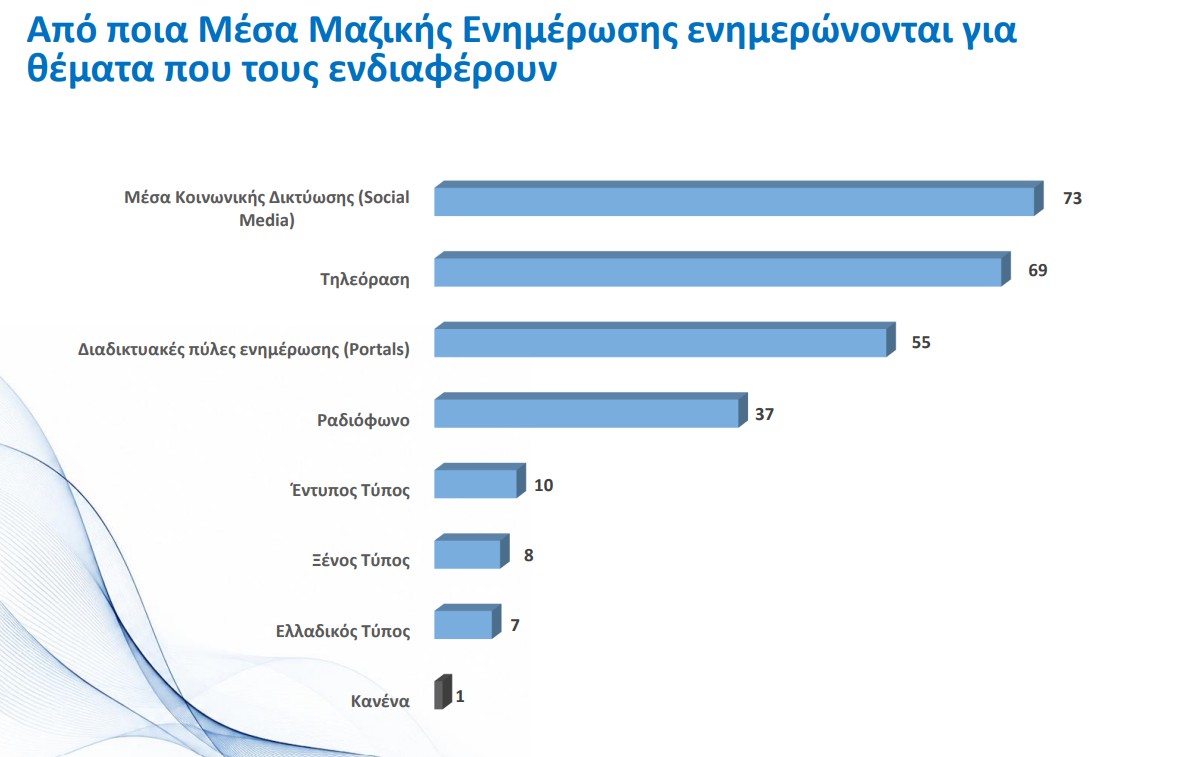
Digital channels are cementing their dominance in Cypriot society, with social media emerging as the undisputed primary source for daily news alerts and updates.
- Social Media (73%): Ranks first in citizens’ preferences for daily engagement with current events.
- Television (69%): Maintains high viewership but shows a steady downward trend (down from 72% in the previous year).
- Web Portals (55%): Recorded a sharp increase of 10 percentage points compared to last year (up from 45%), strengthening their position in the media landscape.
- Radio (37%): Declined from 43% in the previous survey.
When citizens are asked to choose their preferred medium for topics that directly interest them, social media accounts for 44%, television 26%, news portals 20%, and radio just 4%.
Despite the widespread reliance on social media for quick updates, public opinion clearly distinguishes between speed and the accuracy and depth of journalistic investigation. The overwhelming majority of citizens consider print newspapers and websites to be the most suitable outlets for investigative journalism in Cyprus. Specifically, these two formats command the highest level of trust, with a combined 38% (21% for newspapers and 17% for websites), leaving television and radio trailing at a combined 25%. However, when it comes to staying informed about emerging news scandals, public opinion turns primarily to social media (38%) and news portals (21%), followed by television (32%).
Low Trust, Fake News, and Public Manipulation
The survey findings also reveal a deep crisis of trust between citizens and the media ecosystem: nearly one in two Cypriots (49%) state that they do not trust the media, while an identical 49% believe that journalists in the country do not enjoy true freedom of expression. This concern is exacerbated by the spread of disinformation, with 61% of respondents describing the prevalence of fake news in Cyprus as “very high” and identifying social media (73%) and news portals (42%) as the main vectors.
In addition, 86% of the public perceives an organized effort to manipulate or suppress coverage during public scandals, attributing primary responsibility to government agencies (75%), media owners (67%), and, to a lesser extent, journalists themselves (39%).
P.S.
While most news is discovered via social media, this does not necessarily mean citizens are relying on untraditional publishers. Readers primarily consume news through the official social media handles of established newspapers and news portals.
Detailed survey results are available here.