

The emergence of Large Language Models (LLMs) and Generative AI represents a fundamental paradigm shift in communication, comparable to the advent of the internet. As in most fields, Artificial Intelligence (AI) is not replacing communication and PR professionals, at least at this stage. Instead, it equips them with unprecedented capabilities, strengthening their role as strategic consultants.
Companies and governments have entered a “war” of announcements, trying to outdo their competitors in terms of technology and AI utilization. This trend is irreversible. Technology is rapidly entering our lives and becoming indispensable. While mobile phones were once a luxury for the few, today they have become a necessity for everyone. The entry of AI into our lives is so intense that we essentially have no choice but to adopt it—it’s like choosing to have surgery without anesthesia. Technology is convenient, and when something is convenient, it is adopted. For example, with the outbreak of the coronavirus, companies were forced to switch to teleworking. Teleworking was made possible by technology, not only because it increased productivity, but mainly because it made things easier for everyone, offering more flexibility to employees and reducing costs for employers (e.g., savings on office rentals and energy costs).
The Impact on Media and Journalism
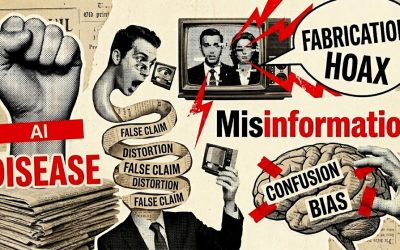
In journalism, AI has already automated routine content production, such as stock market summaries, basic sports reports, and weather updates. It also accelerates the translation of content and suggests news headlines, freeing journalists for more critical tasks like investigative journalism and complex data analysis. However, AI also creates significant challenges. The mass production of content, including sophisticated deepfakes and fake news, necessitates media outlets to invest in sophisticated fact-checking tools and enforce strict standards of journalistic ethics to maintain their credibility.
Below, we analyze the four key pillars where AI is fundamentally reshaping communication practices:
1. Content Production and Optimization
The most obvious application of AI is the sheer speed and scale of content production. AI models excel at quickly generating structured texts and providing specialized translations. Whether for press releases, Q&A documents, or internal communications, AI can deliver a draft in seconds. While execution may require human refinement, AI provides a valuable basis that professionals can correct and adapt to align with the client’s needs and tone. The effectiveness of the final output heavily relies on the user’s ability to provide precise prompting.
AI can even simulate potential public reactions to a statement or press release before publication, offering an indication of an action’s potential effectiveness. For instance, it can interpret how the public, an investor, or a competitor might react to the text. Furthermore, AI has proven capable of adapting texts to a desired style and tone (formal, legal, literary, etc.) and correcting syntax and grammar. As we previously discussed in a Novelty Insider article, AI redefined the creation of content structured with lists, clear subheadings, and accurate data, making it more easily discoverable by Search Generative Experiences and AI platforms (such as Gemini and ChatGPT). To become a “trusted source” cited by these platforms, content must meet specific authority and structure specifications.
2. Visual Communication
We are undeniably living in the age of visual content. AI has significantly enhanced communication in image and video production by offering tools that enable faster, more accurate, and highly creative results. With technologies like automated material processing, text-to-visual generation, and smart file organization, creators can now transform ideas into visual stories with greater efficiency. The use of AI in visual communication is predominantly seen in online and social media strategies, rather than traditional media.
3. Crisis Management
In crisis communication management, AI offers two critical advantages: real-time monitoring and predictive risk assessment. Sophisticated tools for sentiment analysis and social listening monitor billions of data points in real-time. These tools are capable of detecting potential risk areas, such as a sudden spike in negative sentiment or an unofficial discussion on a high-traffic forum, long before it escalates into a full-blown crisis. They can also identify the key stakeholders and influencers in a discussion, allowing the communications team to precisely target their mitigation efforts.
4. Communication Strategy
AI transforms communication strategy from an intuitive process into a data-driven discipline. AI can handle critical functions like analysis, prediction, and message personalization, which communicators then incorporate into their overarching strategy. Drawing on vast data sets, AI can review thousands of case studies and identify successful implementation ideas. In addition, it helps personalize the message by analyzing which platform, tone of voice, and specific content will have the greatest impact on different audiences, thus ensuring maximum effectiveness for every communication action.
The Upgraded Role of the Communications Specialist
At this stage, AI does not pose an existential threat to the communications profession. On the contrary, it cultivates an upgraded role that extends beyond content production, allowing professionals to focus on their core function as strategic advisors. The industry leaders will be those who integrate AI not merely as a text production tool, but as an analytical instrument for strategic decision-making, ensuring that messages retain the authentic voice and core values of the client.
The use of AI to enhance communication efforts will not be meaningful for those unfamiliar with the subject, as it often leads to inaccurate and generic results. LLMs, in an effort to provide a coherent response, may “hallucinate” facts or link them to incorrect sources. If AI generates a false response based on your company’s data, the reputational damage can be immediate and challenging to reverse. For these reasons, AI remains a tool best utilized by communication consultantswho can add their personal experience, professional judgment, and deep expertise.
AI can predict a crisis and draft a response, but it lacks the human empathy and moral judgment required to manage the sensitivity of a situation. It cannot identify an opportunistic communication window, nor can it advise a client on the most appropriate course of action. It can produce content, but it cannot shape identity, nor can it cultivate long-term, interpersonal relationships with journalists (media relations) and stakeholders. These relationships of trust, which are fundamental to effective communication, remain the exclusive domain of the communication consultant.